

Pilot One Academy
QNH, QFE and flight levels explained for student pilots
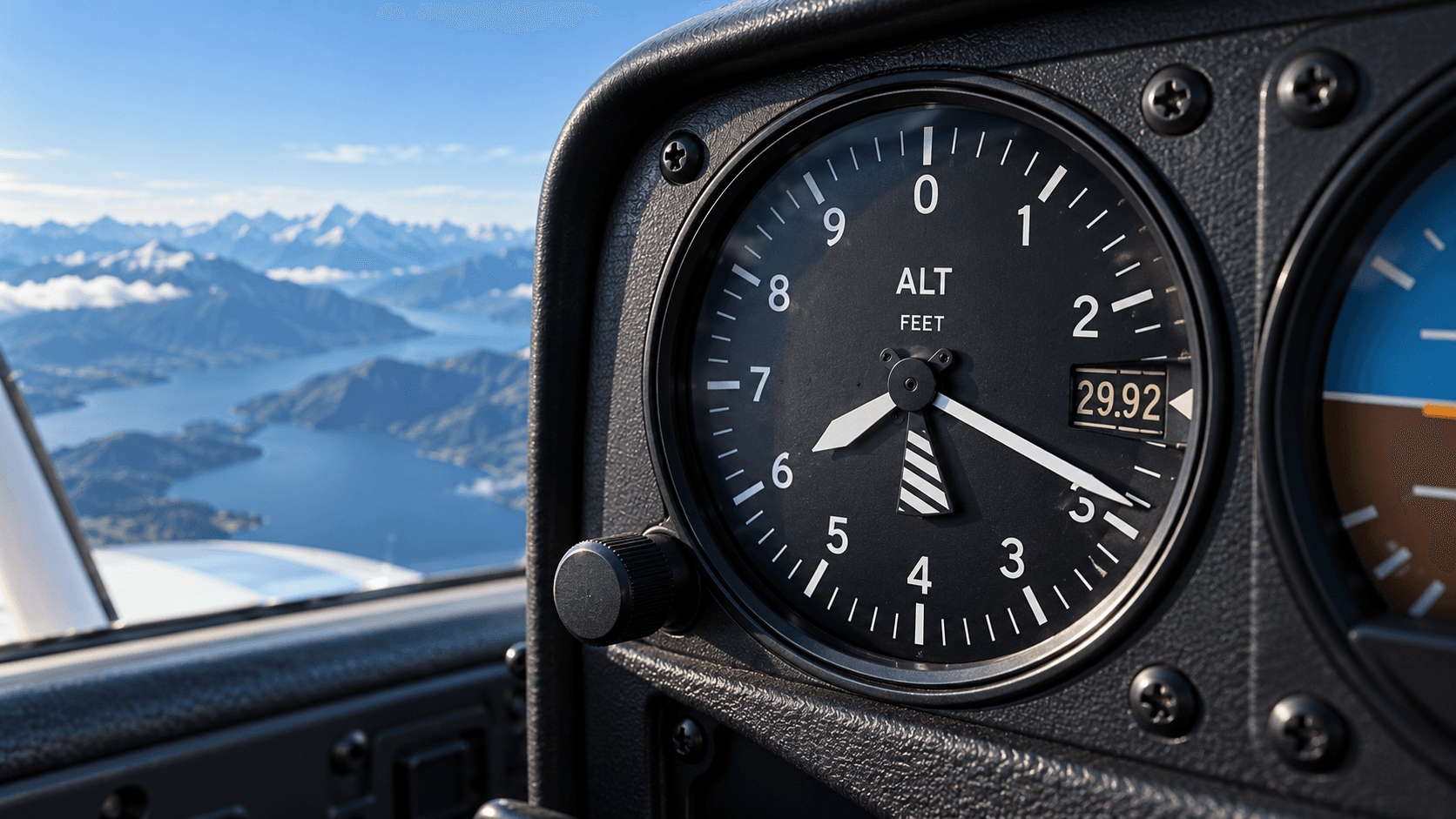
QNH, QFE and 1013.2 hPa are pressure settings that change the reference of a barometric altimeter. QNH gives an approximate altitude above mean sea level, QFE a height above a reference point, and standard pressure is used for flight levels. Instrument and atmospheric conditions also affect the indication.
What does each setting mean?
- QNH: pressure reduced to mean sea level. On the ground, the correct local QNH should give approximately the aerodrome elevation, within applicable tolerances.
- QFE: pressure at the reference point, normally the aerodrome or a runway threshold. At that point the indication is approximately zero.
- 1013.2 hPa: the standard pressure reference for flight levels. A flight level is a pressure surface, not a fixed height above terrain.
EASA's barometric-altitude bulletin explains these references and the risks of incorrect settings.
A simple study example
At an aerodrome with a published elevation of 800 feet, an altimeter correctly set to local QNH should indicate approximately 800 feet on the ground. With QFE for the same reference point it should indicate approximately zero. Both readings describe the same location using different references.
When is standard pressure used?
The transition altitude and transition level define the change of reference according to flight phase and applicable procedures. There is no single universal figure for every aerodrome. Consult current charts and publications, follow ATC instructions and practise the procedure with your instructor.
Common questions
Is QNH the same as height above ground? No. QNH gives an approximate altitude relative to mean sea level; the terrain below may have a different elevation.
Does a flight level guarantee terrain clearance? No. It is a pressure reference and requires appropriate planning, accounting for terrain, temperature and procedures.
Is memorising a rule enough? No. Obtain the current setting from an authorised source, verify units and the indication, and follow the aircraft manual and received instructions. A wrong setting can dangerously reduce obstacle clearance.
Connect these concepts with our guides to reading a METAR and density altitude. This article supports study and does not replace flight instruction or a briefing.
PPL(A) question bank available now
1,695 published questions. Nine subjects. Progress you can measure.
Practice content organised around the PPL(A) syllabus, with mock exams and explanations. We continuously review the bank, and every question can be reported from the app for editorial investigation.